For a first visit to your partner's Punjabi-speaking family, prepare a suitable greeting, a short introduction, a response to food or drink, an offer of help and a polite ending. Learn the replies you are likely to hear as well. A few phrases used appropriately are more useful than a long memorised speech that leaves no room for the family's response.
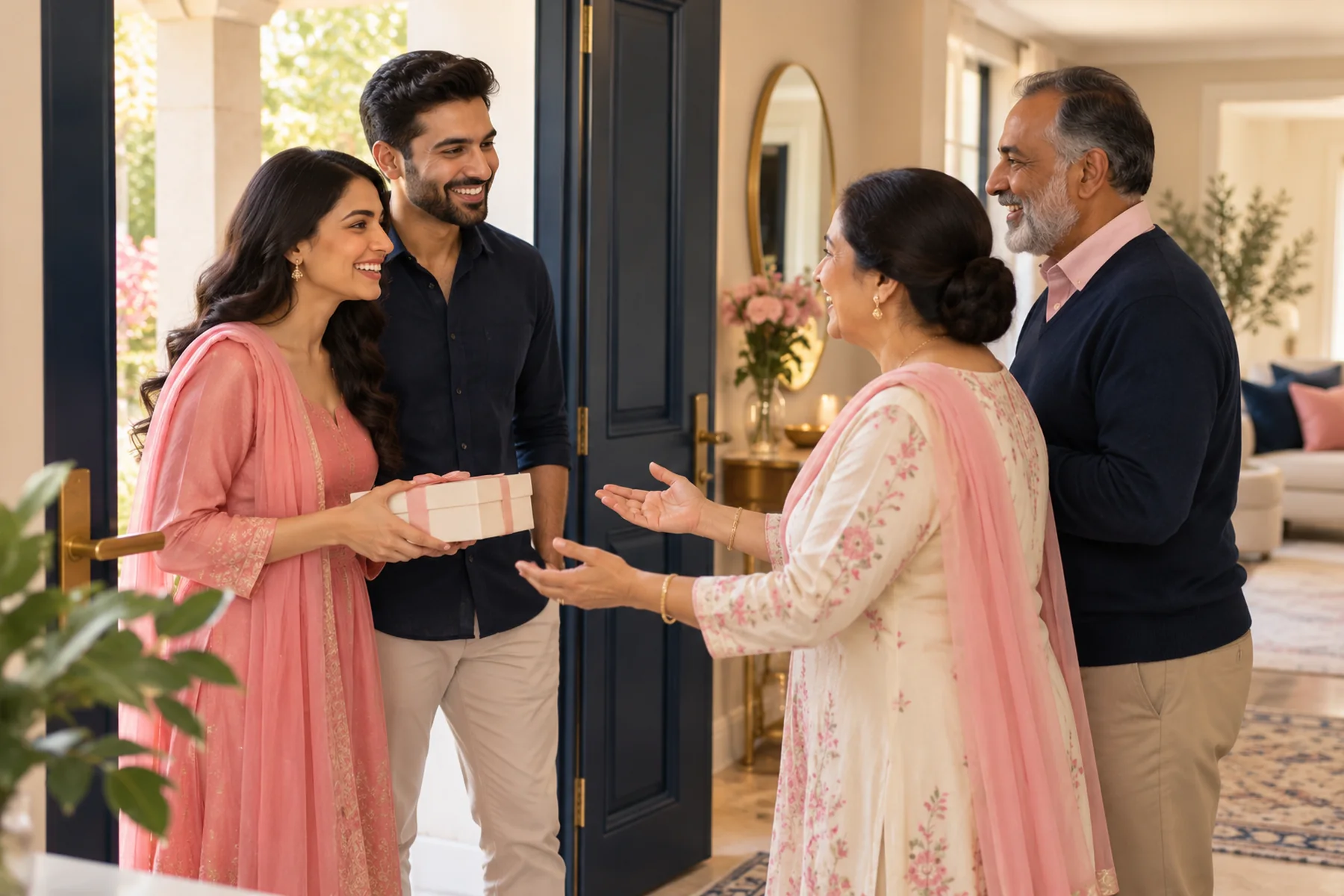
Ask your partner how relatives prefer to be addressed and which greeting they normally use. Do not assume that one household represents every Punjabi family. The examples here are constructed learning models, with a consistent reference form across Roman Punjabi, Gurmukhi and Shahmukhi. Family wording can be different without being wrong.
This is a first-visit rehearsal, not a full family vocabulary course or a guide to relationship etiquette. The partner-focused Punjabi learning plan covers longer-term preparation. Here, choose a few sentences that fit the actual visit and make sure you understand their purpose before using them.
Before memorising phrases, check the setting
Write the names and preferred titles of the people you expect to meet. Ask whether the visit is casual, whether a meal is planned and whether someone will be available to help with an unfamiliar reply. These details give the phrases a context. You are preparing to communicate with particular people, not to pass a generic test of cultural knowledge.
Choose the greeting with that context in mind. Sat Sri Akal is used in many Sikh settings; the Arabic-origin salaam exchange is used in Muslim settings. The greetings and replies guide explains those alternatives. You can ask which opening suits the household without guessing anyone's beliefs from appearance or nationality.
Check any important dietary or access needs in a shared language before the visit. Do not rely on a newly memorised phrase to communicate information that must be understood precisely. Your practice can focus on ordinary conversation while your partner or host helps confirm the essential details.
Arriving and introducing yourself
After the greeting, keep the introduction short. Say your name, express that you are pleased to meet the person and mention your learning only if it helps explain why you may need a slower reply. Pause after each line. The goal is to invite a conversation, not finish every sentence on your card before someone else speaks.
| Meaning | Roman Punjabi | Gurmukhi | Shahmukhi |
|---|---|---|---|
| My name is Alex. | Mera naam Alex hai. | ਮੇਰਾ ਨਾਮ ਐਲੈਕਸ ਹੈ। | میرا نام ایلکس ہے۔ |
| It is lovely to meet you. | Tuhanu mil ke khushi hoi. | ਤੁਹਾਨੂੰ ਮਿਲ ਕੇ ਖ਼ੁਸ਼ੀ ਹੋਈ। | تہانوں مل کے خوشی ہوئی۔ |
| I am learning Punjabi. | Main Punjabi sikh reha/rahi haan. | ਮੈਂ ਪੰਜਾਬੀ ਸਿੱਖ ਰਿਹਾ/ਰਹੀ ਹਾਂ। | میں پنجابی سکھ رِہا/رہی ہاں۔ |
Use your own name. In the learning sentence, choose reha for masculine speaker agreement or rahi for feminine agreement; do not read the slash aloud. Punjabi verb forms vary with grammatical context, including gender, number and person. [1] Ask for a complete checked model when a sentence needs adapting.
At the meal: ask, accept and decline clearly
Practise a response that reflects what you want. A polite decline is not a failure to join the conversation. If a host offers more food, answer that offer rather than reciting a compliment unrelated to it. When you do not understand what is being offered, ask your partner to clarify before agreeing.
| Meaning | Roman Punjabi | Gurmukhi | Shahmukhi |
|---|---|---|---|
| Please give me a little water. | Mainu thoda jiha paani deo ji. | ਮੈਨੂੰ ਥੋੜ੍ਹਾ ਜਿਹਾ ਪਾਣੀ ਦਿਓ ਜੀ। | مینوں تھوڑا جیہا پانی دیو جی۔ |
| No, thank you; this much is enough. | Nahi ji, enna kaafi hai. | ਨਹੀਂ ਜੀ, ਇੰਨਾ ਕਾਫ਼ੀ ਹੈ। | نہیں جی، اینا کافی ہے۔ |
| The food has turned out very well. | Khana bohat changa baneya hai. | ਖਾਣਾ ਬਹੁਤ ਚੰਗਾ ਬਣਿਆ ਹੈ। | کھانا بہت چنگا بنیا ہے۔ |
The model uses hai; some families use ae in comparable everyday expressions. Learn the version your host would use as a complete phrase. Do not silently change the Roman line while reading another version in the script column. Keeping the forms aligned makes practice easier to check.
Offer a genuine compliment and thank the host
Choose a compliment that is true and comfortable to say. You do not need to comment on appearance, family roles or anything personal. A simple observation about the home or appreciation of the invitation can be enough. Leave space for the person's response instead of treating the compliment as a cue to launch another rehearsed sentence.
| Meaning | Roman Punjabi | Gurmukhi | Shahmukhi |
|---|---|---|---|
| Your home is very lovely. | Tuhada ghar bohat sohna hai. | ਤੁਹਾਡਾ ਘਰ ਬਹੁਤ ਸੋਹਣਾ ਹੈ। | تہاڈا گھر بہت سوہنا ہے۔ |
| Thank you very much. | Bohat meharbani ji. | ਬਹੁਤ ਮਿਹਰਬਾਨੀ ਜੀ। | بہت مہربانی جی۔ |
A host may minimise the thanks or return a warm comment. You do not need to translate every word immediately to respond courteously, but do not pretend to understand a new question. Ask for the part you missed and continue. Keep any unfamiliar expression for a later lesson rather than interrupting the visit with a lengthy grammar discussion.
Offer help and recover from a misunderstanding
A broad offer can invite a reply you have not prepared for. Practise both the offer and a way to ask for clarification. You can also offer a specific action after checking the wording with your partner. If the host declines, accept the answer rather than repeating the offer to demonstrate another phrase.
| Meaning | Roman Punjabi | Gurmukhi | Shahmukhi |
|---|---|---|---|
| How can I help? | Main ki madad karaan? | ਮੈਂ ਕੀ ਮਦਦ ਕਰਾਂ? | میں کی مدد کراں؟ |
| Please say it again. | Meharbani karke pher dasso ji. | ਮਿਹਰਬਾਨੀ ਕਰਕੇ ਫੇਰ ਦੱਸੋ ਜੀ। | مہربانی کرکے فیر دسو جی۔ |
Use the repair phrase when you need it, then listen for the repeated information. If repetition alone does not help, switch briefly to a shared language. That is a communication decision, not a reason to apologise repeatedly. After understanding the meaning, you can ask for a shorter Punjabi model to practise another time.
Leave with a simple, appropriate ending
Choose an ending that matches the situation. Thank the host, say that it was good to meet and avoid promising another visit at a specific time unless you mean it. A short closing gives you a complete conversation structure without requiring an elaborate farewell.
Tuhanu mil ke changa laggeya. Phir milange.
ਤੁਹਾਨੂੰ ਮਿਲ ਕੇ ਚੰਗਾ ਲੱਗਿਆ। ਫਿਰ ਮਿਲਾਂਗੇ।
تہانوں مل کے چنگا لگیا۔ پھر ملاں گے۔
It was lovely meeting you. See you again.
Rehearse the whole visit in six turns
Use a household-appropriate greeting first, then follow this constructed practice sequence. The host's lines are English meaning cues so your partner or teacher can supply natural Punjabi suited to the family. This avoids pretending that every household will give the exact same response.
Host: Welcome. What is your name?
Visitor: Mera naam Alex hai. Tuhanu mil ke khushi hoi.
Host: Would you like more food?
Visitor: Nahi ji, enna kaafi hai. Khana bohat changa baneya hai.
Host: Thank you for visiting.
Visitor: Bohat meharbani ji. Tuhanu mil ke changa laggeya.
Repeat the exchange with a different host question. Ask your partner to pause if you need the repair phrase. Practise choosing a relevant reply rather than mechanically continuing to the next line. Once the sequence is manageable, add one personal detail that has been checked for meaning and grammar.
Make a pocket-sized card with your greeting, two responses, a repair and an ending. Keep English meanings beside the Punjabi, and remove any line that feels unsuitable for the planned visit. Bring the card to a one-to-one Punjabi lesson with Komal to rehearse likely replies and adapt the wording to your partner's family.
Language notes
These are constructed text examples, not tutor-recorded audio or reported family interactions. Script and spoken alternatives should be checked against the household's preferred model.
To understand the address choices around these phrases, use the guide to ji, tusi, tu and family titles.