Useful Punjabi family conversation goes beyond saying hello. Practise checking whether someone can hear you, asking about a meal, offering help, arranging a visit and leaving politely. The thirty sentences below are grouped around those situations, with English meanings, Roman Punjabi and both scripts. Choose a few that fit your family rather than memorising the entire page at once.
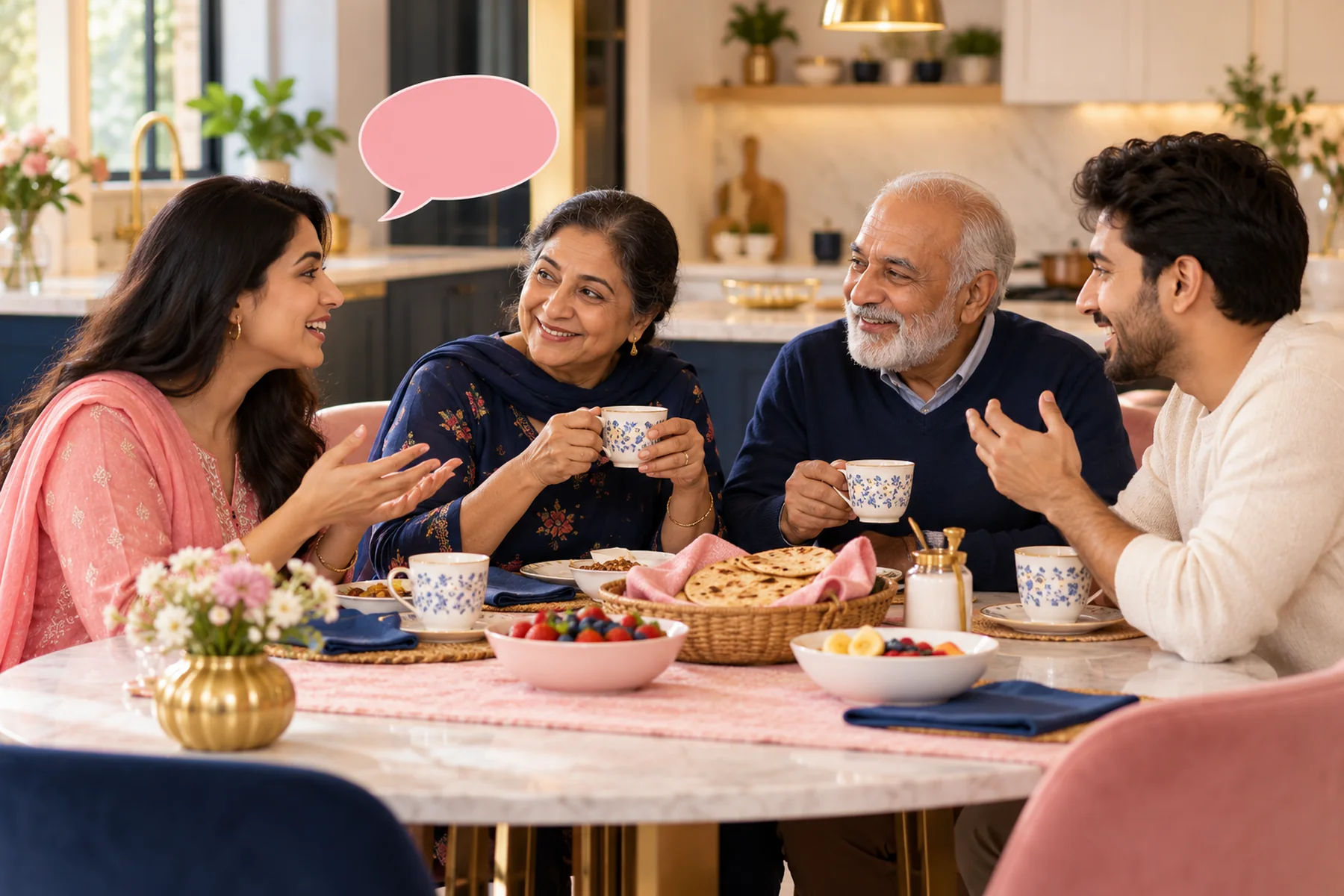
These are constructed learning examples in a Pakistani conversational register, not quotations from a particular household. They use forms such as ae, o and aan; other speakers may use hai, ho and haan. Punjabi University's verb reference documents colloquial auxiliary alternatives. [1] Keep one complete model during practice and ask how your relatives would naturally say it.
The existing Pakistani Punjabi starter guide covers introductions and basic repair phrases. This page extends that toolkit into calls, meals, check-ins and plans. Roman spelling is a reminder, not a recording of every sound. The script lines follow the displayed conversational model, and no original tutor audio is supplied with this text edition.
Six sentences for family phone calls
Begin by checking whether the other person can talk and whether the sound is clear. A connection problem is not a language failure. Say what needs fixing before trying to follow a longer story. When arranging to call later, choose a commitment you can keep and confirm the time separately if it matters.
| No. | English | Roman Punjabi | Gurmukhi | Shahmukhi |
|---|---|---|---|---|
| 1 | Can you hear my voice? | Tusi meri awaaz sun sakde o? | ਤੁਸੀਂ ਮੇਰੀ ਆਵਾਜ਼ ਸੁਣ ਸਕਦੇ ਓ? | تسیں میری آواز سن سکدے او؟ |
| 2 | The sound is not coming through clearly. | Awaaz saaf nahi aa rahi. | ਆਵਾਜ਼ ਸਾਫ਼ ਨਹੀਂ ਆ ਰਹੀ। | آواز صاف نہیں آ رہی۔ |
| 3 | Please wait a minute. | Ik mint ruko ji. | ਇੱਕ ਮਿੰਟ ਰੁਕੋ ਜੀ। | اک منٹ رکو جی۔ |
| 4 | Is now a good time to talk? | Hun gall karni theek ae? | ਹੁਣ ਗੱਲ ਕਰਨੀ ਠੀਕ ਐ? | ہن گل کرنی ٹھیک اے؟ |
| 5 | I will call later. | Main baad vich phone karaanga/karaangi. | ਮੈਂ ਬਾਅਦ ਵਿੱਚ ਫ਼ੋਨ ਕਰਾਂਗਾ/ਕਰਾਂਗੀ। | میں بعد وچ فون کراں گا/کراں گی۔ |
| 6 | Is everyone at home well? | Ghar sabh theek ne? | ਘਰ ਸਭ ਠੀਕ ਨੇ? | گھر سبھ ٹھیک نے؟ |
In sentence five, karaanga is the masculine speaker form and karaangi the feminine speaker form. Practise the form you need rather than reading the slash aloud. Gender, number and person can affect Punjabi verb forms, so changing the subject can require more than replacing a name. [1]
Six sentences for meals and visits
At a meal, use language that reflects what you actually need. Ask for water, accept or decline more food and offer a small practical action. A polite refusal can be clear without being dramatic. Do not say that you want more food just because you have memorised an affirmative answer.
| No. | English | Roman Punjabi | Gurmukhi | Shahmukhi |
|---|---|---|---|---|
| 7 | What have you made today? | Ajj ki banaya ae? | ਅੱਜ ਕੀ ਬਣਾਇਆ ਐ? | اج کی بنایا اے؟ |
| 8 | Please give me a little water. | Mainu thoda jiha paani deo ji. | ਮੈਨੂੰ ਥੋੜ੍ਹਾ ਜਿਹਾ ਪਾਣੀ ਦਿਓ ਜੀ। | مینوں تھوڑا جیہا پانی دیو جی۔ |
| 9 | Would you like more roti? | Hor roti chahidi ae? | ਹੋਰ ਰੋਟੀ ਚਾਹੀਦੀ ਐ? | ہور روٹی چاہیدی اے؟ |
| 10 | No, thank you; this much is enough. | Nahi ji, enna kaafi ae. | ਨਹੀਂ ਜੀ, ਇੰਨਾ ਕਾਫ਼ੀ ਐ। | نہیں جی، اینا کافی اے۔ |
| 11 | Shall I put the dishes away? | Main bartan rakh devaan? | ਮੈਂ ਬਰਤਨ ਰੱਖ ਦੇਵਾਂ? | میں برتن رکھ دیواں؟ |
| 12 | The food has turned out very well. | Khana bohat changa baneya ae. | ਖਾਣਾ ਬਹੁਤ ਚੰਗਾ ਬਣਿਆ ਐ। | کھانا بہت چنگا بنیا اے۔ |
In sentence eleven, the task is a specific offer of help. Wait for the answer before moving anything, and ask where the dishes belong when that is unclear. A useful practice exchange includes the host's response, not only the offer. Keep any household vocabulary alternative with the whole phrase and its meaning.
Six sentences for checking in and staying connected
These lines are for ordinary, caring conversation, not medical assessment. Ask whether a person would like help, then listen to the answer. A check-in should not become an obligation to disclose private health information. When a situation is urgent, use whichever shared language communicates clearly rather than turning it into Punjabi practice.
| No. | English | Roman Punjabi | Gurmukhi | Shahmukhi |
|---|---|---|---|---|
| 13 | Did you rest today? | Tusi ajj aaraam kita? | ਤੁਸੀਂ ਅੱਜ ਆਰਾਮ ਕੀਤਾ? | تسیں اج آرام کیتا؟ |
| 14 | How are you feeling now? | Hun tabiyat kiven ae? | ਹੁਣ ਤਬੀਅਤ ਕਿਵੇਂ ਐ? | ہن طبیعت کیویں اے؟ |
| 15 | Do you need anything? | Kise cheez di lor ae? | ਕਿਸੇ ਚੀਜ਼ ਦੀ ਲੋੜ ਐ? | کسے چیز دی لوڑ اے؟ |
| 16 | Shall I sit with you? | Main tuhade kol baith jaavaan? | ਮੈਂ ਤੁਹਾਡੇ ਕੋਲ ਬੈਠ ਜਾਵਾਂ? | میں تہاڈے کول بیٹھ جاواں؟ |
| 17 | Take care of yourself. | Apna khayal rakhyo. | ਆਪਣਾ ਖ਼ਿਆਲ ਰੱਖਿਓ। | اپنا خیال رکھیو۔ |
| 18 | I miss you. | Tuhadi yaad aaundi ae. | ਤੁਹਾਡੀ ਯਾਦ ਆਉਂਦੀ ਐ। | تہاڈی یاد آؤندی اے۔ |
A warm expression should fit the relationship. Use sentence eighteen when it represents what you want to say, not as a compulsory ending. Family communication can be affectionate, practical, reserved or playful. The objective is to find language that belongs to your real exchange rather than imitate a single idealised picture of Punjabi family life.
Six sentences for making plans
Before a visit, practise the information you need to confirm: day, time, place and who is coming. Repeat important details in a language both people understand. In these examples, kal means tomorrow because the surrounding question refers to a future plan; the same word can refer to yesterday in a past context.
| No. | English | Roman Punjabi | Gurmukhi | Shahmukhi |
|---|---|---|---|---|
| 19 | Will you be at home tomorrow? | Kal tusi ghar hovoge? | ਕੱਲ੍ਹ ਤੁਸੀਂ ਘਰ ਹੋਵੋਗੇ? | کل تسیں گھر ہووگے؟ |
| 20 | We will come in the evening. | Asi shaam nu aavaange. | ਅਸੀਂ ਸ਼ਾਮ ਨੂੰ ਆਵਾਂਗੇ। | اسیں شام نوں آواں گے۔ |
| 21 | What time should we come? | Kehre vele aaiye? | ਕਿਹੜੇ ਵੇਲੇ ਆਈਏ? | کیہڑے ویلے آئیے؟ |
| 22 | Which day suits you? | Tuhanu kehra din changa lagda ae? | ਤੁਹਾਨੂੰ ਕਿਹੜਾ ਦਿਨ ਚੰਗਾ ਲੱਗਦਾ ਐ? | تہانوں کیہڑا دن چنگا لگدا اے؟ |
| 23 | Please let us know a little beforehand. | Thoda pehlan dass deo ji. | ਥੋੜ੍ਹਾ ਪਹਿਲਾਂ ਦੱਸ ਦਿਓ ਜੀ। | تھوڑا پہلاں دس دیو جی۔ |
| 24 | We are on the way. | Asi raste vich aan. | ਅਸੀਂ ਰਸਤੇ ਵਿੱਚ ਆਂ। | اسیں رستے وچ آں۔ |
Keep time zones and exact dates explicit when relatives live abroad. A phrase such as “in the evening” is useful practice but may not be enough to arrange a call across countries. Confirm the actual time separately. Language learning should make the plan clearer, not create uncertainty about when someone expects you.
Six sentences for help and polite exits
A specific offer is often easier to practise than an open-ended promise. You can ask where to put something, offer to open a door or explain that you need to leave. Use the response you receive rather than continuing a memorised sequence after the other person has already answered.
| No. | English | Roman Punjabi | Gurmukhi | Shahmukhi |
|---|---|---|---|---|
| 25 | How can I help? | Main ki madad karaan? | ਮੈਂ ਕੀ ਮਦਦ ਕਰਾਂ? | میں کی مدد کراں؟ |
| 26 | Where should this go? | Eh kithe rakhna ae? | ਇਹ ਕਿੱਥੇ ਰੱਖਣਾ ਐ? | ایہ کتھے رکھنا اے؟ |
| 27 | Shall I open the door? | Main darwaza khol devaan? | ਮੈਂ ਦਰਵਾਜ਼ਾ ਖੋਲ੍ਹ ਦੇਵਾਂ? | میں دروازہ کھول دیواں؟ |
| 28 | I need to leave now. | Mainu hun chalna paina ae. | ਮੈਨੂੰ ਹੁਣ ਚੱਲਣਾ ਪੈਣਾ ਐ। | مینوں ہن چلنا پَینا اے۔ |
| 29 | We will let you know when we get home. | Asi ghar pahunch ke dass devaange. | ਅਸੀਂ ਘਰ ਪਹੁੰਚ ਕੇ ਦੱਸ ਦੇਵਾਂਗੇ। | اسیں گھر پہنچ کے دس دیواں گے۔ |
| 30 | It was lovely talking with you today. | Ajj tuhade naal gall karke changa laggeya. | ਅੱਜ ਤੁਹਾਡੇ ਨਾਲ ਗੱਲ ਕਰਕੇ ਚੰਗਾ ਲੱਗਿਆ। | اج تہاڈے نال گل کرکے چنگا لگیا۔ |
Turn selected sentences into three short exchanges
For a phone-call rehearsal, A asks whether now is a good time to talk. B asks for a minute, and A waits. B then asks whether the voice is clear. Use sentences four, three and one in that order. Your partner can answer naturally in a shared language first, then help you build a checked Punjabi reply.
For a meal rehearsal, A asks whether B would like more roti. B declines and explains that the amount is enough. B then offers to put the dishes away. Use sentences nine, ten and eleven. Change the food only after checking how the rest of the sentence needs to change; do not assume every noun can be substituted without agreement changes.
For a visit rehearsal, A asks whether B will be home tomorrow. B confirms, and A asks what time to come. Finish with the planned arrival period. Use sentences nineteen, twenty-one and twenty, adding the actual time once it is clear. The purpose is to exchange information, not merely say three sentences correctly in isolation.
Make a personal six-line conversation card
Choose one sentence from each of the five situations and one closing line. Write where you would use it, a likely response and one part you need to check. Practise with the table visible, then hide the Roman column. Keep the card short enough that you can listen to your partner rather than spend the whole exchange searching for your next line.
After trying the exchange, note whether you chose an appropriate sentence, understood the response and adjusted when the reply changed. Keep useful corrections with the full phrase. Bring your card to a family-conversation Punjabi lesson with Komal so that practice can match your relatives, preferred variety and actual plans.
Language reference and scope
Examples are constructed for practice. Household wording and transliteration vary. The phrase set is not an audio resource or a claim of an independently completed Komal language review.
To choose which family scenarios deserve your first practice time, complete the partner-focused Punjabi needs worksheet.