Back of the mouth
ਕ ਖ ਗ ਘ ਙ
ka · kha · ga · gha · nga
The main closure is made towards the back of the mouth. Keep the difference between a plain release and a breathier release clear.
Punjabi reading and writing
Learn the core letters in manageable sound groups, understand how vowel signs work and follow a practical routine for reading your first Punjabi words.
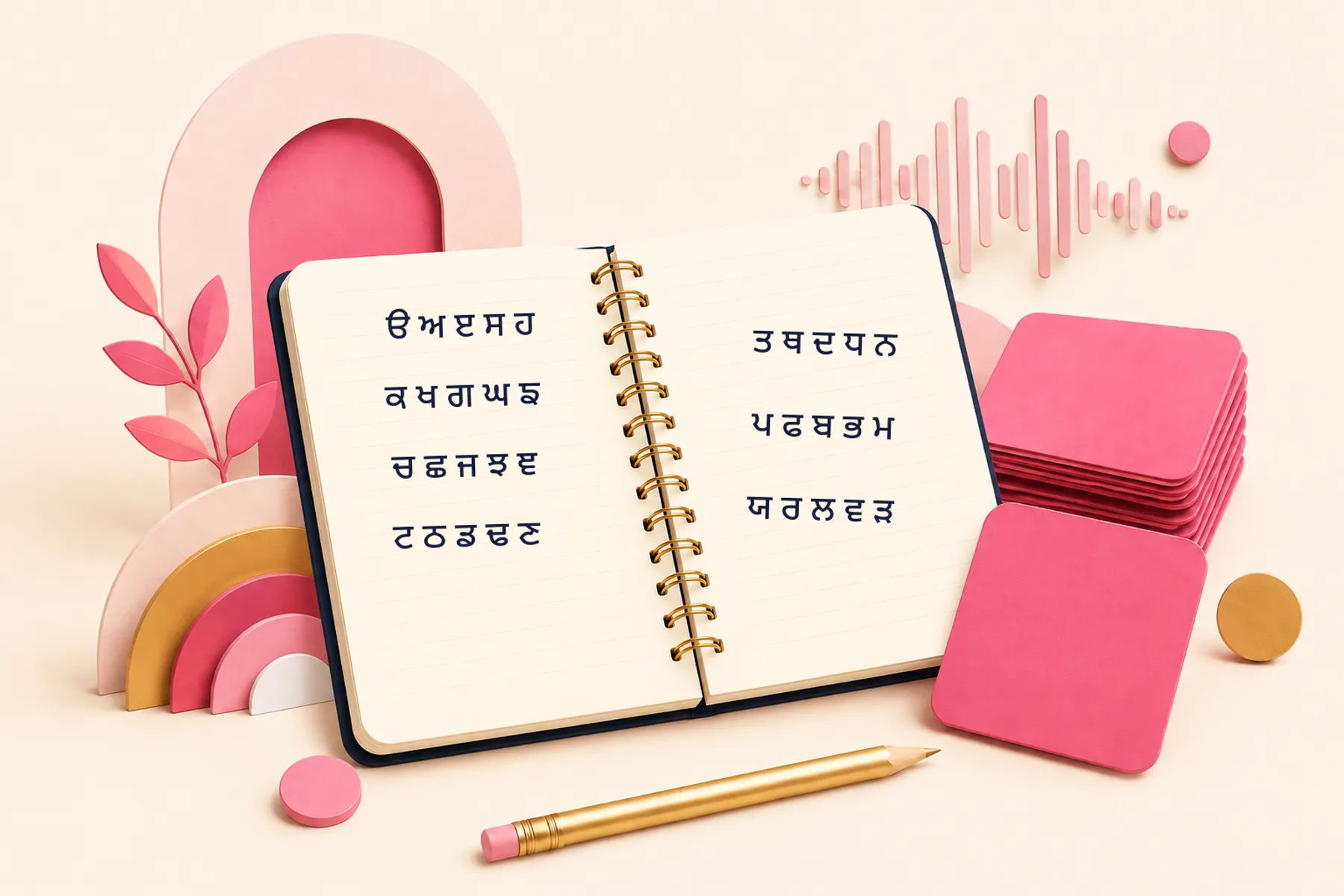
Gurmukhi is the left-to-right script most commonly associated with Punjabi in India. Learning it can help you read books, messages, lyrics and learning materials, even if your first goal is conversation. You do not need beautiful handwriting or perfect recall before you begin reading. You need a clear order and repeated contact with the same shapes.
This guide introduces the core traditional letter set, the role of vowel carriers and a beginner practice sequence. Regional pronunciation and the names used for individual letters can vary slightly, so bring the list into a lesson if you want it matched to the Punjabi spoken in your family.
The traditional beginner sequence is often called the paintī akhar. It contains three opening characters followed by consonants organised broadly by how and where the sound is produced. Modern Punjabi also uses additional dotted letters for sounds found in loanwords and particular pronunciations, so do not be surprised when a real text contains more symbols than the core sequence below.
The alphabet order is useful, but sound groups make the sequence easier to understand. The five-letter rows below move through related mouth positions. Saying each row slowly helps you notice aspiration, voicing and nasal sounds instead of treating every letter as an unrelated symbol.
The main closure is made towards the back of the mouth. Keep the difference between a plain release and a breathier release clear.
These sounds move the contact forwards. Listen before copying so English spelling habits do not control your pronunciation.
The tongue is drawn farther back than for the dental row. Practise the physical contrast slowly.
The tongue moves towards the upper teeth. English speakers often replace these with a middle English t or d, so placement matters.
These sounds use the lips. Use a small paper strip to notice the stronger breath after aspirated sounds.
The remaining letters include commonly used fricatives, liquids and glides: ਸ ਹ ਯ ਰ ਲ ਵ ੜ. Add them after the five main rows, then mix all the cards so you learn recognition rather than only the memorised order.
Punjabi syllables require a vowel sound. Gurmukhi uses three vowel carriers at the beginning of the alphabet and vowel signs that attach to consonants. A consonant without a visible vowel sign normally carries an inherent vowel, although natural speech and word position affect what you hear.
Do not try to learn every vowel sign on the same day as every consonant. First recognise the carriers and a small consonant group. Then attach one vowel sign to several known consonants and read the resulting syllables aloud. This substitution method shows you what changed and prevents visual overload.
Notice the horizontal headline that connects many letters within a word. Learn the main body of a character first, then practise its headline and any marks in a consistent order. Keep the notebook ruled and write large enough to see where curves, stems and joins begin.
Trace a correct model only two or three times. After that, cover it and write from memory. Compare shape, proportion and stroke placement rather than judging whether your handwriting looks decorative. Reading recognition is the first goal.
A private lesson can connect each letter to the Punjabi you already speak or want to learn, with immediate help on sound and writing position.
Explore one-to-one Punjabi lessonsLearn the opening characters and one consonant row. Point, say, cover and recall. Stop before the shapes begin to blur together.
Add a second row and compare plain, aspirated, voiced and nasal sounds. Mix old and new cards.
Add a small set of vowel signs to known consonants. Read syllables and copy a few short teacher-verified words.
Read shuffled letters, write ten from memory and mark only the characters that still need work. Begin the next week with those, not with the entire alphabet again.
No. You can build conversation and listening without learning a script. Gurmukhi is valuable when reading Punjabi in this writing system supports your goals, family or learning materials. If you are deciding what to prioritise, read whether speaking or reading should come first.
Many learners can recognise a useful group of letters within the first few weeks, but fluent reading takes longer because you must combine letters, vowel signs and real vocabulary. Ten focused minutes most days is more useful than one long weekly session.
No. Punjabi is the language; Gurmukhi is one writing system used for it. Shahmukhi is another. The spoken language connects communities across scripts, while vocabulary and pronunciation also vary by region.
Build a clear reading pathway with patient correction, useful vocabulary and practice matched to your level.
Choose your Punjabi lesson